
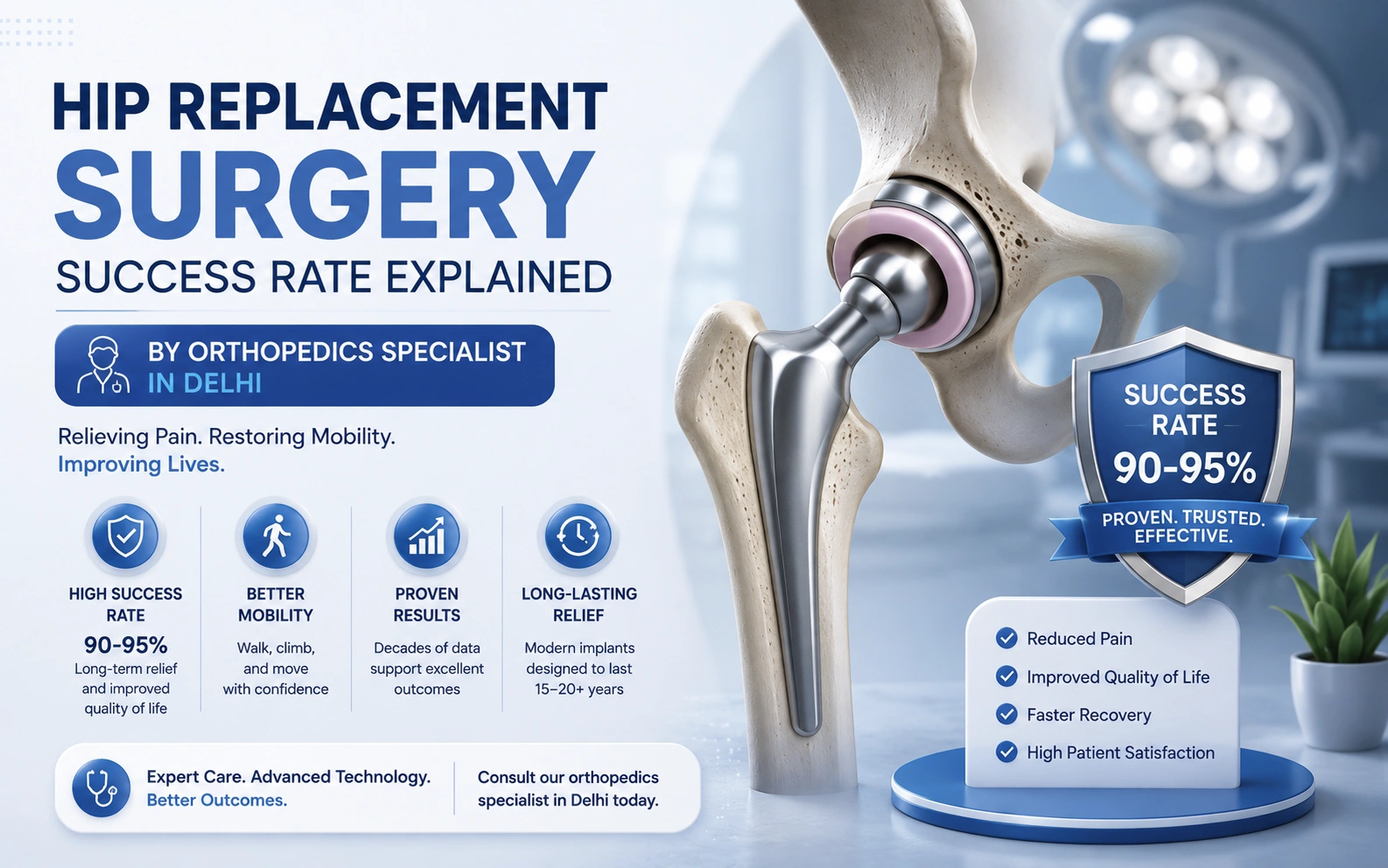
More than 95% of patients report pain relief and improved mobility after hip replacement surgery, according to the Arthritis Foundation. Hip replacement surgery remains one of the most successful orthopedic procedures for patients with severe hip arthritis, joint damage, or mobility limitations. Patients in Delhi commonly search for hip replacement surgery when persistent hip pain starts affecting walking, stair climbing, sleep, or daily activities.
Hip joint replacement involves removing damaged portions of the hip joint and replacing them with artificial implants. Orthopedic specialists recommend this procedure when medicines, physiotherapy, and lifestyle modifications no longer control pain or stiffness. Modern surgical techniques, improved implant materials, and structured rehabilitation programs have increased the long-term success rate of hip surgery significantly.
Patients searching for hip replacement in Delhi should understand surgical success rates, recovery timelines, implant lifespan, complication risks, and treatment costs before selecting an orthopedic doctor in Delhi or a hip replacement surgery clinic. This guide explains the medical facts, recovery expectations, and specialist considerations associated with hip replacement surgery.
Conditions That Lead to Hip Joint Replacement
Osteoarthritis remains the leading reason for hip replacement surgery in Delhi and worldwide. The condition gradually damages cartilage inside the hip joint, causing pain, stiffness, swelling, and reduced movement. Common conditions that lead to hip replacement surgery include:
- Osteoarthritis:
Cartilage breakdown inside the hip joint causes bones to rub together. Patients often develop severe pain and reduced joint mobility over time. - Rheumatoid Arthritis:
Chronic joint inflammation damages the hip lining and surrounding bone structures. Long-term inflammation may permanently affect joint function. - Avascular Necrosis:
Reduced blood supply to the hip bone leads to bone collapse. This condition commonly affects younger adults after steroid use, trauma, or alcohol-related bone damage. - Hip Fractures:
Severe fractures in older adults may damage the hip joint permanently. Orthopedic doctors may recommend partial or total hip replacement after complex fractures. - Post-Traumatic Arthritis:
Previous injuries or accidents affecting the hip joint can accelerate cartilage wear and chronic pain development.
Patients searching for hip replacement in Delhi should seek orthopedic evaluation if hip pain continues for several weeks despite medicines, physiotherapy, or activity modification. Early diagnosis helps orthopedic specialists determine whether non-surgical management or hip surgery remains the appropriate treatment option.
How Successful Is Hip Replacement Surgery?
More than 90% of modern hip replacement implants continue functioning effectively after 15 years, according to research published by the National Center for Biotechnology Information. Hip replacement surgery delivers high long-term success rates when orthopedic specialists select the correct implant type, surgical technique, and rehabilitation plan.
Key factors that influence hip replacement success rates include:
- Type of Hip Replacement Procedure:
Total hip replacement replaces both the ball and socket portions of the joint. Partial hip replacement replaces only the damaged femoral head. Orthopedic specialists usually recommend total hip replacement for advanced arthritis and severe joint degeneration. - Surgeon Experience:
Experienced orthopedic doctors in Delhi often achieve better implant positioning and lower complication rates. Surgical precision directly affects implant stability and long-term joint function. - Implant Quality and Material:
Modern ceramic, metal, and polyethylene implants improve durability and reduce wear. Implant selection depends on patient age, activity level, and bone quality. - Patient Age and Weight:
Younger and physically active patients may place greater stress on implants over time. Excess body weight can increase implant wear and joint pressure. - Physiotherapy Compliance:
Structured rehabilitation programs improve muscle strength, flexibility, and walking balance after surgery. Patients who follow physiotherapy instructions consistently usually recover faster. - Existing Medical Conditions:
Diabetes, osteoporosis, cardiovascular disease, and smoking history may affect wound healing and recovery timelines after hip surgery.
Recovery Timeline After Hip Surgery
Most patients begin standing and walking within 1–2 days after hip replacement surgery under supervised rehabilitation programs. Recovery timelines vary depending on patient age, muscle strength, medical conditions, and the type of hip surgery performed.
Orthopedic specialists in Delhi usually recommend early movement after surgery to reduce stiffness, improve circulation, and support muscle recovery. Structured physiotherapy remains one of the most important factors influencing mobility after hip joint replacement.
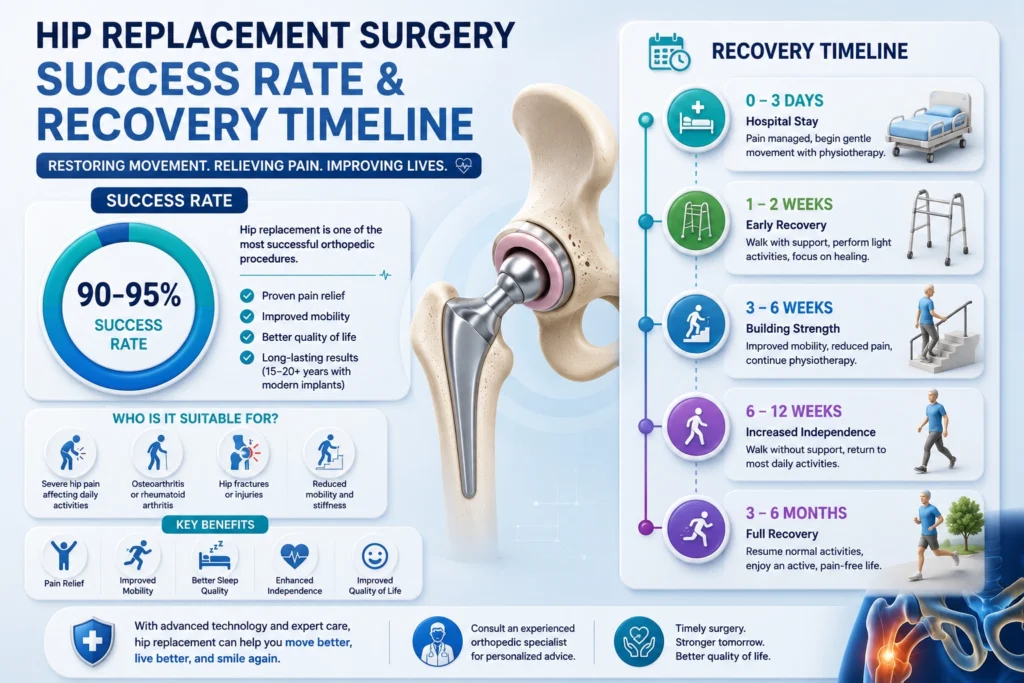
Typical recovery stages after hip replacement surgery include:
- First 24–48 Hours:
Patients usually stand and take assisted steps with support devices such as walkers or crutches. Medical teams monitor pain levels, wound condition, and blood circulation carefully. - First 1–3 Weeks:
Most patients continue physiotherapy exercises focused on walking balance, hip movement, and muscle strengthening. Swelling and mild discomfort remain common during this phase. - Weeks 3–6:
Many patients resume light daily activities, office-based work, and short-distance walking. Orthopedic doctors may gradually reduce walking support devices depending on recovery progress. - After 6 Weeks:
Stair climbing, longer walking distances, and improved flexibility become easier for many patients. Some patients may resume driving after orthopedic evaluation and mobility assessment. - 3–6 Months After Surgery:
Joint strength, mobility, and walking confidence improve significantly during this period. Recovery speed depends heavily on physiotherapy participation and overall health condition.
Risks and Revision Surgery Rates
Modern hip replacement surgery shows complication rates below 2% for many major surgical risks when performed using current orthopedic techniques. Although hip surgery delivers high success rates, orthopedic specialists still evaluate possible complications before recommending treatment.
Common risks associated with hip replacement surgery include:
- Infection:
Research shows infection occurs in nearly 1% of hip replacement patients. Severe infections may require implant removal or revision surgery in rare cases. - Blood Clots:
Reduced movement after surgery can increase clot formation risk in the legs. Orthopedic specialists usually prescribe blood thinners, compression devices, and early walking exercises. - Hip Dislocation:
Sudden twisting movements or incorrect joint positioning during early recovery may cause implant dislocation. Modern surgical techniques reduced dislocation rates significantly. - Implant Loosening:
Artificial implants may gradually loosen after many years because of wear or bone changes. Younger and highly active patients may face higher long-term wear risk. - Leg Length Difference:
Some patients notice mild differences in leg length after surgery. Orthopedic surgeons carefully evaluate implant positioning to minimize this issue.
Cost of Hip Replacement in Delhi
Hip replacement surgery cost in Delhi commonly ranges between ₹2,00,000 and ₹6,00,000 depending on the hospital, implant type, surgeon experience, and patient condition. Cost variations also depend on whether patients require total hip replacement, partial hip replacement, or revision surgery.
Orthopedic specialists usually explain the complete treatment plan before surgery because pricing includes multiple medical and rehabilitation components. Patients searching for hip replacement in Delhi should evaluate both treatment quality and long-term implant reliability instead of selecting treatment based only on lower pricing.
How to Select an Orthopedics Doctor in Delhi
Important factors to consider while selecting an orthopedics doctor in Delhi include:
- Joint Replacement Experience:
Orthopedic specialists with regular hip replacement surgery experience often manage complications and implant positioning more effectively. - Hospital and Surgical Facilities:
Advanced operation theaters, infection-control systems, ICU support, and physiotherapy departments improve surgical safety and recovery management. - Rehabilitation Support:
Structured physiotherapy remains essential after hip surgery. Patients should confirm whether rehabilitation services are available within the treatment facility. - Revision Surgery Capability:
Some patients may require revision surgery after implant wear or complications. Orthopedic centers with revision surgery expertise provide better long-term treatment support. - Location Accessibility:
Patients searching for orthopedic doctors in Dwarka or bone clinics in Delhi may benefit from nearby follow-up consultation and physiotherapy access during recovery.
Hip replacement surgery is one of the most reliable orthopedic procedures for long-term pain relief and mobility restoration. Patients experiencing chronic hip pain, stiffness, reduced walking ability, or joint damage should seek orthopedic evaluation before symptoms worsen further.
Modern hip surgery techniques, improved implant materials, and structured rehabilitation programs have significantly improved recovery timelines and surgical success rates. Proper diagnosis, surgeon experience, physiotherapy support, and long-term follow-up remain important factors influencing treatment outcomes after hip joint replacement.
Patients searching for hip replacement in Dwarka or orthopedic specialists in Dwarka can consult The Bone Clinic for detailed joint evaluation, imaging assessment, and treatment planning. The clinic provides orthopedic consultation for hip pain, arthritis-related joint damage, mobility limitations, and post-traumatic hip conditions. Book a consultation today!