

More than 95% of hip fractures result from falls, and medically stable patients often benefit from surgery within 24–48 hours to reduce complications and support recovery. (Source)
Ankle and hip fractures are serious orthopedic injuries that require prompt diagnosis and appropriate treatment from Orthopedics clinic in Dwarka to restore mobility and prevent long-term complications. While ankle fractures commonly occur due to sports injuries, road accidents, or twisting injuries, hip fractures are more frequent among older adults and often require urgent surgical intervention.
Ankle Fracture Symptoms and Causes
Most stable ankle fractures require about 6 weeks for bone healing, although complete recovery may take several months depending on the severity of the injury and rehabilitation.
An ankle fracture is a break in one or more of the bones that form the ankle joint, including the tibia, fibula, or talus. The injury may range from a small crack in the bone to a complex fracture involving multiple bones and surrounding ligaments. Early diagnosis by an experienced orthopedic specialist is important to determine the most appropriate treatment and prevent long-term complications.
Common Ankle Fracture Symptoms
An ankle fracture usually causes immediate pain and difficulty walking. Common symptoms include:
- Severe pain around the ankle after an injury
- Swelling and tenderness around the joint
- Bruising or skin discoloration
- Difficulty or inability to bear weight
- Visible deformity of the ankle or foot
- Reduced range of motion
- A snapping or cracking sound at the time of injury
Some ankle fractures can resemble a severe ankle sprain. Persistent pain, swelling, or difficulty walking after a fall or twisting injury should be evaluated with X-rays or other imaging tests.
Common Causes of an Ankle Fracture
An ankle fracture occurs when excessive force is applied to the ankle joint. Common causes include:
- Slipping or falling on uneven surfaces
- Road traffic accidents
- Sports injuries involving sudden twisting or impact
- Falls from stairs or a height
- Workplace injuries
- High-impact recreational activities
People with osteoporosis or weakened bones may sustain an ankle fracture even after a minor fall.
Types of Ankle Fractures
Orthopedic specialists in Dwarka classify ankle fractures based on the location and severity of the injury. The most common types include:
- Lateral malleolus fracture: A fracture of the lower end of the fibula.
- Medial malleolus fracture: A fracture involving the inner part of the tibia.
- Bimalleolar fracture: Fractures affecting both the medial and lateral malleolus, resulting in an unstable ankle.
- Trimalleolar fracture: A complex fracture involving three parts of the ankle joint that usually requires surgery.
- Open fracture: A severe injury where the broken bone pierces the skin and requires immediate surgical treatment.
Ankle Fracture Treatment and Surgery in Delhi
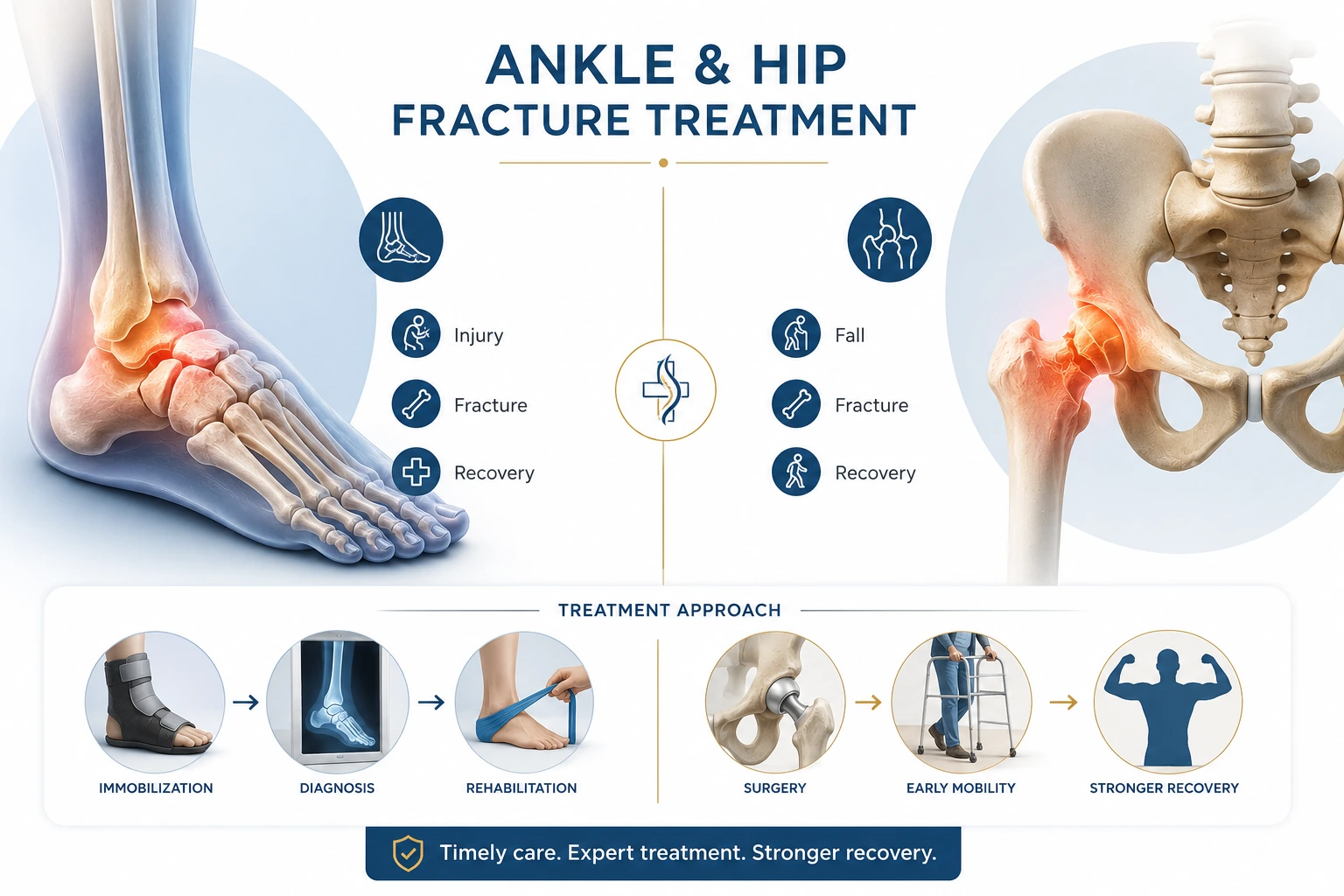
Most stable ankle fractures heal in about 6 weeks, while complete recovery may take several months depending on the severity of the injury and rehabilitation program.
Non-Surgical Treatment
Stable ankle fractures without significant bone displacement can often be treated without surgery. Common treatment options include:
- Immobilization with a cast, splint, or walking boot
- Restricting weight-bearing until the bone begins to heal
- Pain-relieving medications as prescribed
- Ice application and leg elevation to reduce swelling
- Regular follow-up X-rays to monitor healing
Once the fracture is stable, physiotherapy helps restore ankle strength, flexibility, and balance.
Ankle Fracture Surgery
The most commonly performed procedure is Open Reduction and Internal Fixation (ORIF). During surgery, the orthopedic surgeon realigns the broken bones and stabilizes them using metal plates, screws, or rods. These implants hold the bones in the correct position while they heal.
The choice of surgical technique depends on the fracture pattern, bone quality, and the patient’s functional needs.
Hip Fracture Symptoms and Causes
A hip fracture is a break in the upper part of the femur (thigh bone) near the hip joint. It is a serious orthopedic injury that often requires immediate medical attention. Although hip fractures are more common in older adults due to osteoporosis and falls, younger individuals can also sustain them following road traffic accidents, sports injuries, or other high-impact trauma.
Common Hip Fracture Symptoms
A hip fracture usually causes severe pain and makes standing or walking difficult. Common symptoms include:
- Severe pain in the hip, groin, or upper thigh
- Inability to stand or bear weight on the affected leg
- Swelling and bruising around the hip
- Stiffness and reduced range of motion
- The injured leg appearing shorter than the other
- The foot turning outward on the affected side
- Difficulty moving the hip after a fall or accident
If these symptoms develop after an injury, seek immediate medical attention to prevent further complications.
Common Causes of a Hip Fracture
Hip fractures can result from both low-impact and high-impact injuries. Common causes include:
- Falls, especially in older adults
- Osteoporosis or reduced bone density
- Road traffic accidents
- Falls from stairs or significant heights
- Sports-related injuries
- Direct trauma during workplace or recreational activities
Older adults are at a higher risk because weakened bones are more likely to fracture even after a minor fall.
Hip Fracture Treatment and Surgery in Delhi
Treatment for a hip fracture depends on the type of fracture, its location, the patient’s age, bone quality, and overall health. Most hip fractures require surgery because the broken bones are unlikely to heal properly without stabilization. Orthopedic specialists use clinical evaluation and imaging tests to develop a personalized treatment plan.
Diagnosis of a Hip Fracture
An accurate diagnosis helps determine the most appropriate treatment. Orthopedic specialists may recommend:
- Physical examination
- X-rays to identify the fracture
- CT scan for complex fractures
- MRI if a fracture is suspected but not visible on an X-ray
The results help determine whether surgery is required and which surgical technique is most appropriate.
Non-Surgical Treatment
Non-surgical treatment may include:
- Pain management
- Restricted weight-bearing
- Walking aids such as walkers or crutches
- Physiotherapy and rehabilitation
- Regular follow-up imaging to monitor healing
Hip Fracture Surgery
Most displaced hip fractures require surgery to restore stability and allow early mobilization. Depending on the fracture pattern and the patient’s condition, the orthopedic surgeon may recommend:
- Internal Fixation: Metal screws, plates, or intramedullary nails stabilize the broken bone.
- Partial Hip Replacement (Hemiarthroplasty): The damaged femoral head is replaced while preserving the hip socket.
- Total Hip Replacement: Both the femoral head and the hip socket are replaced with artificial components in selected patients.
Ankle and hip fractures require prompt medical evaluation to ensure proper healing and restore mobility. Early diagnosis, accurate imaging, and timely treatment can reduce the risk of complications and improve recovery outcomes. Whether managed with conservative treatment or surgery, the recovery process is essential for regaining strength, joint function, and independence.
If you experience severe pain, swelling, difficulty bearing weight, or limited movement after an injury, do not delay seeking medical attention. Consulting an experienced ankle and hip fracture doctor in Dwarka can help you receive an accurate diagnosis and a personalized treatment plan.
Book a consultation with the orthopedic experts at The Bone Clinic today to receive advanced ankle fracture treatment in Delhi, hip fracture treatment in Delhi, and personalized fracture treatment in Dwarka.