

The most commonly affected age group for frozen shoulder is 40–70 years. It is especially common in adults with diabetes or thyroid disorders. This condition reduces shoulder mobility and increases pain during daily arm movement. The frozen shoulder progression has 3 clinical stages: freezing, frozen, and thawing phases. Frozen Shoulder. Each stage changes pain intensity and shoulder flexibility.
The freezing phase as per Mayo Clinic, is 6 weeks to 9 months long, where pain gradually increases with progressive stiffness. Shoulder movement becomes restricted during overhead activities and daily tasks. This phase often drives patients to seek orthopaedic care.
The progression requires a structured orthopaedic treatment in Dwarka to prevent chronic stiffness and disability. In Delhi, orthopaedics clinics assess range of motion and guide treatment through physiotherapy, injections, or advanced interventions.
Frozen Shoulder Symptoms and Signs
Shoulder stiffness develops gradually as the joint capsule tightens, reducing normal movement. In Delhi, patients present late when pain starts affecting daily routine activities. Early symptoms include night pain, reduced shoulder rotation, and difficulty lifting the arm overhead. These symptoms interfere with sleep and routine functional tasks.
Key Early Signs
- Persistent shoulder pain: Pain starts mild and increases over weeks
- Progressive stiffness: Reduced ability to rotate or lift the arm
- Night discomfort: Pain worsens during sleep
- Limited overhead movement: Difficulty in reaching or lifting objects
- Functional restriction: Difficulty in dressing, combing hair, or lifting bags
Causes of Frozen Shoulder Explained by Orthopaedics
The condition develops when the shoulder capsule thickens and tightens, restricting movement. In orthopaedic clinics in Delhi frequently observe delayed cases where stiffness has already progressed significantly before consultation. Frozen shoulder often develops without a clear injury, but certain medical and lifestyle factors increase risk. Reduced shoulder use after pain, surgery, or injury can trigger stiffness progression.
Key Causes and Risk Factors
- Diabetes: Strongly associated with higher frozen shoulder risk
- Thyroid disorders: Linked with increased joint capsule inflammation
- Prolonged immobilization: After injury, fracture, or surgery
- Age factor: More common in middle-aged and older adults
- Gender tendency: Slightly more frequent in women
- Systemic conditions: Cardiovascular disease and metabolic disorders
Frozen Shoulder 4 Stages and Recovery Timeline
The condition evolves slowly as the shoulder capsule thickens and restricts movement. Orthopaedics clinics in Delhi assess stage progression to decide treatment intensity and rehabilitation planning.
- The freezing stage is where pain gradually increases and shoulder motion begins to reduce. Night pain becomes more prominent and disrupts sleep. Movement restriction starts mildly but worsens with time, especially during overhead activities and external rotation.
- In the frozen stage pain may reduce but stiffness becomes most severe. Shoulder mobility remains significantly limited even though inflammation decreases. Patients in Delhi often report difficulty performing daily tasks like dressing, lifting objects, and reaching behind the back.
- In the thawing stage shoulder movement gradually returns with structured physiotherapy. Range of motion improves slowly over time. Recovery speed depends on early intervention, exercise consistency, and severity of capsule stiffness.
Stage-Wise Progression Summary
- Freezing Stage: Increasing pain and early stiffness (6 weeks–9 months)
- Frozen Stage: Maximum stiffness, reduced pain (4–12 months)
- Thawing Stage: Gradual recovery of movement (6–24 months)
- Total Duration: 1–3 years in most cases
Frozen Shoulder Diagnosis at Orthopaedics Clinics in Delhi
Diagnosis of frozen shoulder relies on clinical examination and range-of-motion testing: Orthopaedics clinics assess both active and passive shoulder movements to confirm stiffness patterns. Reduced external rotation is the earliest measurable limitation.
Imaging is used to rule out other shoulder conditions such as rotator cuff injury, arthritis, or structural injury: X-rays or MRI scans are recommended when symptoms overlap with other shoulder disorders.
Diagnostic Steps in Clinics
- Physical examination: Assessment of pain, stiffness, and shoulder mobility
- Range-of-motion testing: Comparison of active vs passive movement restriction
- Pain evaluation: Identification of night pain and movement-triggered discomfort
- Imaging tests: X-ray or MRI to rule out structural damage
- Medical history review: Diabetes, thyroid disorders, or prior immobilization
Frozen Shoulder Treatment in Delhi
Orthopaedics select treatment based on severity of stiffness, pain intensity, and functional limitation. Treatment typically starts with medications and gentle physiotherapy. As stiffness progresses, structured rehabilitation becomes necessary to restore range of motion.
Treatment Options in Delhi for Frozen Shoulder
- Pain medications: NSAIDs to reduce inflammation and discomfort
- Physiotherapy: Guided stretching to improve shoulder mobility
- Steroid injections: Reduce inflammation and improve movement in early stages
- Hydrodilatation: Joint capsule expansion using sterile fluid injection
- Arthroscopic surgery: Recommended only when non-surgical methods fail
Frozen Shoulder Workout by Bone Specialists in Delhi
Orthopaedics in Delhi recommend controlled stretching to avoid worsening inflammation. Exercises focus on restoring gradual range of motion without triggering pain spikes. Forced stretching during this phase can worsen pain. Patients are advised to perform low-intensity exercises under supervision.
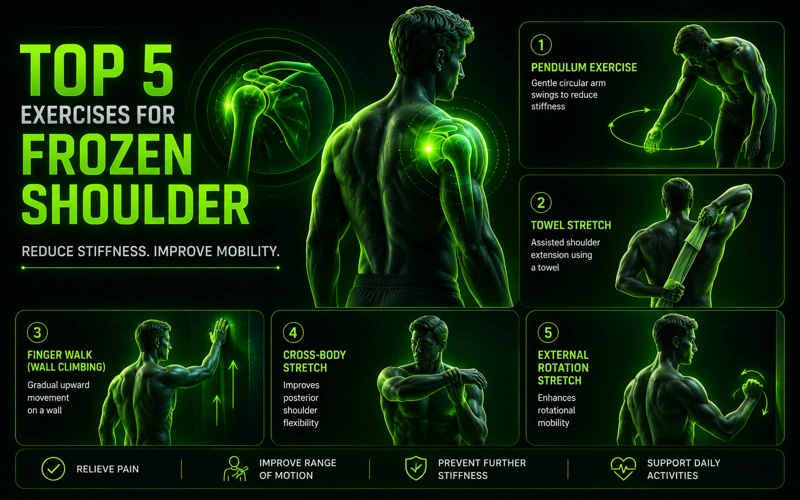
Recommended Frozen Shoulder Exercises
- Pendulum exercise: Gentle circular arm swings to reduce stiffness
- Towel stretch: Assisted shoulder extension using a towel
- Finger walk (wall climbing): Gradual upward movement on a wall
- Cross-body stretch: Improves posterior shoulder flexibility
- External rotation stretch: Enhances rotational mobility
Physiotherapy sessions are commonly recommended multiple times per week during rehabilitation. In Delhi, orthopaedic specialists adjust exercise intensity based on pain response and stage progression. Consistency in movement improves long-term shoulder function and reduces recovery duration.
Frozen Shoulder Home Remedies
The freezing stage is when pain gradually increases and shoulder movement becomes restricted. During this phase, home care focuses on reducing discomfort and preventing further stiffness. In Delhi, patients are often advised to combine home measures with orthopaedic guidance for better outcomes.
Heat therapy is commonly used to relax stiff shoulder muscles before movement or exercises. Warm compresses can improve blood flow and reduce morning stiffness. It is generally used before physiotherapy or stretching routines.
Home Care and Daily Modifications
- Warm compress application: Apply heat for 10–15 minutes before exercises
- Sleep positioning: Avoid lying on the affected shoulder side
- Activity modification: Avoid sudden overhead lifting or jerky movements
- Gentle movement: Keep shoulder active with light daily motion
- Pain management: Use prescribed medications only when needed
When to Visit the Best Orthopaedic in Dwarka
Assess whether the condition is in freezing, frozen, or thawing stage before deciding treatment intensity. Early consultation helps prevent long-term shoulder immobility.
Signs You Should Visit an Orthopaedic Clinic in Delhi
- Pain lasting more than 6 weeks: No improvement with home remedies
- Severe night pain: Sleep disruption due to shoulder discomfort
- Restricted arm movement: Difficulty lifting or rotating the arm
- Failed exercise response: No improvement after regular physiotherapy
- Daily activity limitation: Trouble dressing, lifting, or reaching overhead
Delayed treatment can lead to prolonged stiffness and reduced shoulder mobility. A combination of physiotherapy, medication, and guided rehabilitation improves functional recovery.
Orthopaedic consultation is recommended when shoulder pain and stiffness persist beyond 6 weeks without improvement. Early treatment helps restore movement and prevents progression to severe restriction.
At The Bone Clinic (Delhi), frozen shoulder care is delivered through a structured, stage-based approach focused on restoring movement and reducing pain without unnecessary delay in recovery. The clinic evaluates shoulder mobility in detail, identifies the exact stage of frozen shoulder, and builds a personalised treatment plan.