
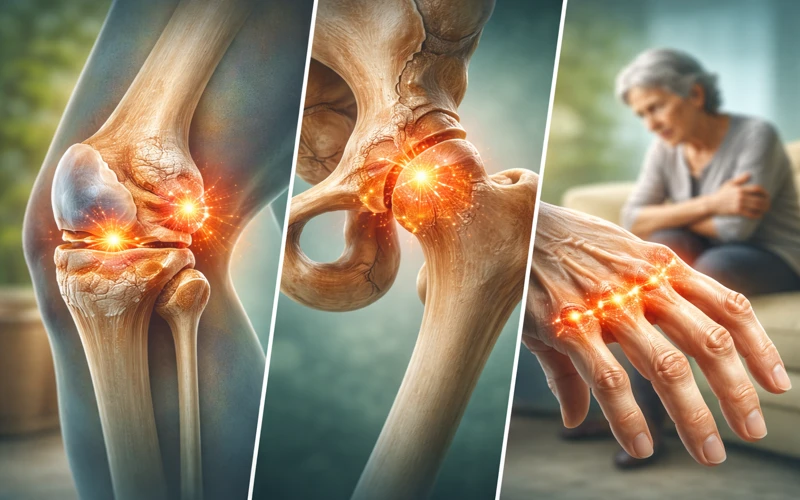
Osteoarthritis affects approximately 528 million people worldwide, making it the most common form of arthritis affecting joints (World Health Organization). The condition develops when the protective cartilage covering the ends of bones gradually wears down, leading to joint pain, stiffness, and reduced mobility. Osteoarthritis most frequently affects weight-bearing joints such as the knees, hips, and spine, although it can also occur in the hands and other joints. The condition usually progresses slowly over several years as cartilage damage increases and joint structures begin to change.
Although osteoarthritis is a degenerative joint disease and cannot currently be completely cured, an orthopaedic doctor in Delhi can manage symptoms and slow disease progression through medical treatment, physiotherapy, and lifestyle management.
Orthopaedic specialists providing osteoarthritis treatment in Delhi evaluate joint pain through clinical examination and imaging tests such as X-rays to determine disease severity and recommend appropriate treatment options.
What Osteoarthritis Means for Patients in Delhi?
Osteoarthritis is the most common joint disorder in India and affects millions of adults, particularly after the age of 50 as per NHP. The condition develops when the cartilage that cushions joints gradually breaks down, causing bones to rub against each other.
Cartilage normally acts as a shock absorber inside joints, allowing smooth movement during activities such as walking, bending, or climbing stairs. In osteoarthritis, this protective cartilage becomes thinner over time. As cartilage damage progresses, the joint develop pain, stiffness, swelling, and reduced mobility.
Osteoarthritis Causes
Osteoarthritis prevalence increases significantly with age, affecting nearly 22%–39% of the Indian population depending on region and lifestyle factors (ResearchGate). The disease develops gradually as joint cartilage degenerates over time.
Age-Related Cartilage Degeneration
Age is one of the most significant risk factors for osteoarthritis. Cartilage becomes thinner and less flexible as people age, increasing the likelihood of joint damage. This process commonly affects adults above 50 years of age.
Excess Body Weight
Excess body weight places additional pressure on weight-bearing joints such as the knees and hips. Clinical research indicates that every 5 kg increase in body weight can raise the risk of knee osteoarthritis progression by about 36%. This explains why knee osteoarthritis is frequently seen in overweight patients.
Previous Joint Injuries
Joint injuries caused by sports accidents, fractures, or ligament damage can increase the risk of developing osteoarthritis later in life. Damage to joint structures may lead to early cartilage degeneration.
Repetitive Joint Stress
Occupations that involve frequent squatting, heavy lifting, or prolonged standing may contribute to osteoarthritis development. These activities place repeated stress on joints, particularly the knees and spine.
Genetic and Lifestyle Factors
Genetic predisposition and lifestyle habits can also influence osteoarthritis risk. Individuals with a family history of joint disease may be more likely to develop osteoarthritis earlier in life.
Osteoarthritis Stages and Joint Damage Progression in Indian Patients
Osteoarthritis progression usually occurs gradually over several years as cartilage damage increases inside the joint. The disease develops in stages as joint structures slowly deteriorate.
Early Stage Osteoarthritis
In the early stage, cartilage begins to soften and lose elasticity, but joint structure remains largely preserved. Patients may experience mild joint stiffness or discomfort after activity. Symptoms often improve with rest and basic treatment such as physiotherapy or medication.
Moderate Stage
As osteoarthritis progresses, cartilage becomes thinner and joint space begins to narrow, which increases friction between bones. According to Indian orthopaedic clinical references cited by ICMR, patients in this stage often report frequent pain during walking, climbing stairs, or prolonged standing.
Joint inflammation and swelling may also appear as the body reacts to cartilage damage.
Advanced Stage Osteoarthritis
In advanced osteoarthritis, significant cartilage loss exposes underlying bone surfaces, causing persistent pain and limited joint movement. Patients may develop joint deformity, reduced flexibility, and difficulty performing daily activities.
Can Osteoarthritis Be Cured?
Osteoarthritis is considered a chronic degenerative joint disease, and current medical evidence shows that damaged cartilage cannot fully regenerate once it has worn away. This means osteoarthritis cannot be completely cured, but its symptoms and progression can be effectively managed.
Why Osteoarthritis Cannot Be Fully Reversed
Osteoarthritis develops when cartilage inside the joint gradually deteriorates over time. According to the Indian Council of Medical Research (ICMR), cartilage has very limited capacity to repair itself because it does not receive direct blood supply. Once significant cartilage loss occurs, restoring the joint to its original structure is not currently possible through medication alone.
Osteoarthritis Treatment in Delhi in Dwarka
Since a complete cure is not available, treatment focuses on reducing pain, improving joint function, and slowing disease progression. Orthopaedic specialists typically recommend a combination of:
- Pain relief medicines
- Anti-inflammatory drugs
- Physiotherapy and strengthening exercises
- Weight management
- Lifestyle modification
These measures help patients maintain mobility and reduce joint stress.
When Advanced orthopedic treatment in Delhi Is Required
In advanced cases where joint damage becomes severe, orthopaedic specialists may recommend joint replacement surgery, particularly for knee osteoarthritis. According to clinical guidance used in Indian orthopaedic practice, knee replacement surgery can significantly improve joint function and reduce chronic pain in severe osteoarthritis patients.
Osteoarthritis Medicine and Drugs Used in Treatment in Dwarka, Delhi
Medical treatment for osteoarthritis focuses on pain relief and inflammation control rather than reversing cartilage damage. Doctors prescribe medicines based on symptom severity, joint involvement, and patient health condition.
Paracetamol for Pain Relief
Paracetamol is often recommended as the first-line medicine for mild to moderate pain in Indian clinical practice. It helps reduce pain without significantly affecting stomach lining when used within recommended dosage.
Doctors usually prescribe paracetamol when patients experience intermittent joint pain during activity or early-stage osteoarthritis.
Non-Steroidal Anti-Inflammatory Drugs (NSAIDs)
For patients with persistent joint pain and inflammation, doctors may prescribe NSAIDs such as ibuprofen, diclofenac, or naproxen. These medicines reduce inflammation in the joint and help improve mobility.
According to ICMR clinical guidance, NSAIDs should be used under medical supervision because long-term use may cause stomach irritation or kidney-related side effects.
Topical Pain Relief Medicines
Doctors in India often recommend topical NSAID gels or creams that are applied directly to the affected joint. These medicines provide localized pain relief and are commonly used for knee or hand osteoarthritis.
Topical treatments may reduce the need for higher doses of oral medication.
Intra-Articular Injections
In patients with moderate osteoarthritis, orthopaedic specialists may recommend joint injections such as corticosteroids or hyaluronic acid. These injections help reduce joint inflammation and temporarily improve joint lubrication.
Osteoarthritis cannot currently be completely cured, medical treatment can help control symptoms, slow disease progression, and improve joint function. Early diagnosis through clinical examination and imaging allows doctors to identify the stage of joint damage and recommend appropriate management strategies.
Treatment may include pain-relief medicines, anti-inflammatory drugs, physiotherapy, lifestyle changes, and joint injections, depending on the severity of the disease. In advanced stages, orthopaedic procedures such as joint replacement surgery may be considered to restore mobility and reduce chronic pain.
Orthopaedic doctors providing osteoarthritis treatment in Dwarka evaluate joint symptoms through physical examination and imaging tests such as X-rays to determine the severity of cartilage damage. Based on this evaluation, specialists recommend a personalized treatment plan that may include medication, physiotherapy, lifestyle modification, or advanced orthopaedic procedures when necessary.
Early consultation and timely treatment can help manage symptoms and support long-term joint health. Patients experiencing ongoing joint discomfort should seek evaluation from a qualified orthopaedic doctor in Dwarka to receive appropriate care and guidance.