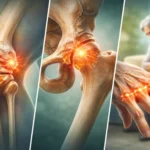

Approximately 32.5 million adults live with osteoarthritis. Joint degeneration is common with aging, yet many people associate it incorrectly with cracking joints sound. MRI-based research confirms that the cracking sound results from gas cavity formation inside synovial fluid, not bone friction. This process, known as cavitation, differs from cartilage wear.
A 50-year observational study found no increased arthritis in habitual knuckle crackers. Evidence does not support the belief that cracking knuckles directly causes osteoarthritis.
However, joint cracking accompanied by pain lasting more than 2–3 weeks, morning stiffness beyond 30 minutes, swelling, or reduced mobility may indicate structural degeneration. The article discusses if joint cracking is harmful or not and risk of arthritis in joints after cracking sounds, as explained by Orthopedics in Delhi.
What Causes Cracking Joints Sound in Adults?
MRI imaging confirms that joint cracking sound occurs due to gas cavity formation within synovial fluid. When joint pressure changes rapidly, dissolved gases such as nitrogen form bubbles that collapse and create a popping sound. After a joint cracks, it usually cannot crack again for 15–30 minutes because gases must re-dissolve into the fluid before another cavity forms. This “reset period” supports the cavitation theory.
Tendon and ligament movement can also create clicking sounds. As tendons slide over bony structures, they may snap briefly and produce audible noise. This explains cracking elbow joints and knee popping during movement.
Crepitus differs from cavitation. Crepitus produces a grinding or grating sensation rather than a single pop. It often reflects cartilage thinning, especially after age 50 years, when musculoskeletal degeneration becomes more common. Occasional painless cracking without swelling or stiffness is usually benign. Cracking accompanied by persistent pain, restricted motion, or swelling requires evaluation by an orthopaedics specialist in Dwarka Delhi
Cracking Knuckles Good or Bad? Arthritis Risk Explained
A 50-year longitudinal observation found no increased arthritis in the habitually cracked hand compared to the non-cracked hand. Major risk factors include aging, joint injury, obesity, and genetic predisposition—not joint cracking.
Does cracking joints cause damage? Habitual knuckle cracking may lead to temporary soft tissue swelling or mild reduction in grip strength in some individuals, but structural cartilage damage has not been demonstrated in long-term clinical evidence.
Cracking joints and arthritis become clinically connected only when popping is accompanied by symptoms such as:
- Pain lasting more than 2–3 weeks
- Morning stiffness beyond 30 minutes
- Progressive swelling
- Reduced range of motion
When Does Cracking Joints Cause Damage in Dwarka Delhi Patients
Musculoskeletal degeneration increases significantly after age 50 years. In this age group, persistent joint cracking combined with symptoms may reflect cartilage wear rather than harmless cavitation. Morning stiffness lasting more than 30 minutes suggests inflammatory or degenerative joint disease. Simple gas-related popping does not produce prolonged stiffness.
Pain lasting more than 2–3 weeks after activity indicates possible structural irritation. Recurrent swelling or warmth around the joint requires clinical evaluation. Grinding or grating sensation, known as crepitus, differs from a single cracking joints sound. Crepitus often occurs when cartilage thins and joint surfaces lose smooth alignment.
Mechanical symptoms such as locking, catching, or instability signal structural damage. These symptoms may indicate meniscal injury, ligament strain, or progressive osteoarthritis.
When Is Joint Replacement in Dwarka Delhi needed?
Advanced osteoarthritis shows joint space narrowing on X-ray imaging, indicating significant cartilage loss. Joint replacement becomes a consideration when structural degeneration causes persistent disability.
Conservative treatment failure for 3–6 months despite medication, physiotherapy, and activity modification signals progression. Persistent pain during walking, stair climbing, or at rest requires surgical evaluation.
Joint replacement in Delhi NCR is considered when patients experience:
- Severe pain limiting daily activities
- Night pain affecting sleep
- Reduced walking distance
- Inability to bend or straighten the joint fully
- Progressive deformity
When is joint replacement needed? It is recommended when pain and stiffness significantly impair quality of life and non-surgical treatment fails.
Types of Joint Replacement Surgeries Explained
- Total knee replacement is one of the most commonly performed joint replacement surgeries worldwide. The procedure replaces damaged cartilage and bone surfaces with prosthetic components to restore alignment and movement.
- Partial knee replacement is suitable when osteoarthritis affects only one compartment of the knee. This option preserves healthy bone and ligaments while addressing localized cartilage loss.
- Total hip replacement involves replacing the femoral head and acetabulum with artificial implants. It is recommended for severe hip arthritis with persistent pain and joint space narrowing on imaging.
- Shoulder replacement surgery treats advanced shoulder arthritis with chronic pain and limited range of motion. Reverse shoulder replacement may be considered when rotator cuff damage is present.
Joint replacement surgeries are recommended after 3–6 months of failed conservative management and radiological confirmation of advanced degeneration.
Cracking joints and arthritis become clinically relevant when symptoms accompany the sound. Morning stiffness lasting more than 30 minutes, pain beyond 2–3 weeks, swelling, or reduced range of motion may indicate degenerative changes.
Joint replacement in Dwarka, Delhi is considered when conservative treatment fails for 3–6 months and imaging shows joint space narrowing.
Painless, occasional joint cracking is generally harmless. Persistent symptoms require orthopedic evaluation.
Consult an orthopaedic doctor in Delhi, if joint cracking is associated with pain, swelling, stiffness, or functional limitation.
Visit The Bone Clinic, a leading orthopaedic clinic in Dwarka. We offer structured evaluation, advanced imaging, non-surgical management, and joint replacement surgeries in Delhi NCR.
Early consultation with an orthopaedics specialist in Dwarka helps prevent progression to advanced joint damage and ensures timely treatment planning.