
“It’s just age-related” is one of the most common, and most misleading, things older adults are told about their knee pain. While ageing joints are more prone to pain, knee pain always has a specific underlying cause, and identifying it correctly is what separates temporary relief from a genuine long-term solution. Dr. Mahanta at The Bone Clinic in Dwarka breaks down what’s actually driving knee pain in older adults and what permanent treatment realistically looks like.
Why Are Older Adults So Prone to Knee Pain?
Your knee joint carries your body weight through decades of walking, climbing, sitting, and standing. Over time, the cartilage that cushions the joint gradually thins, tendons and ligaments lose some of their elasticity, and the muscles supporting the joint naturally weaken without consistent activity.
None of this happens overnight. It’s a slow accumulation of wear that eventually crosses a threshold where pain, stiffness, and reduced movement become noticeable. Understanding this gradual process helps explain why knee pain often shows up “suddenly” in someone’s 60s or 70s, even though the underlying changes were building for years beforehand.
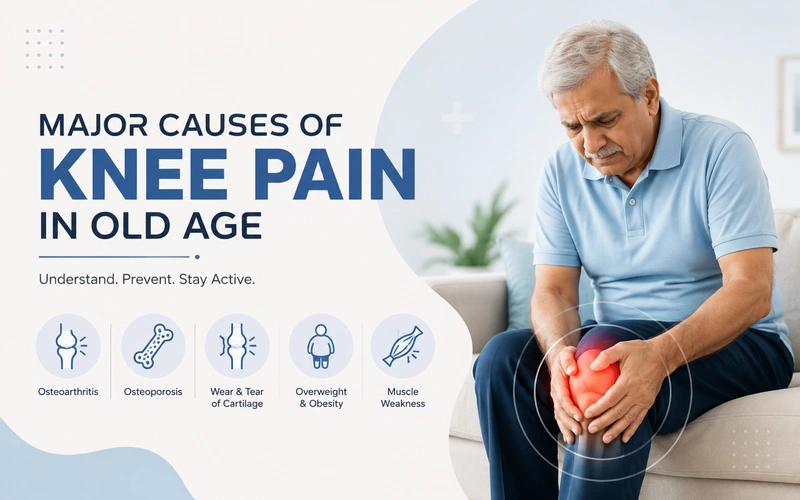
What Are the Major Causes of Knee Pain in Old Age?
Osteoarthritis: The Most Common Culprit
Osteoarthritis is a degenerative joint condition in which the protective cartilage in the knee gradually breaks down. As the cushioning wears thin, bones can eventually rub against each other, causing pain, stiffness, swelling, and a grinding sensation during movement. It’s overwhelmingly the leading cause of chronic knee pain among older adults and tends to worsen gradually rather than appearing suddenly.
Rheumatoid Arthritis
This is an autoimmune disorder rather than a wear-and-tear condition, the immune system mistakenly attacks the joint lining, leading to inflammation and pain. It commonly affects both knees at once and is often accompanied by joint symptoms elsewhere in the body, such as the hands or wrists.
Old Injuries Catching Up
A ligament tear, meniscus injury, or fracture from years or even decades earlier doesn’t always fully disappear. As surrounding tissue weakens with age, old injury sites often become a source of renewed pain and joint instability later in life.
Tendinitis and Bursitis
Repetitive strain or overuse can inflame the tendons around the knee (tendinitis) or the small cushioning sacs near the joint (bursitis), leading to localised swelling, tenderness, and pain, particularly with movement.
Gout
A buildup of uric acid crystals within the joint can trigger sudden, intense knee pain, swelling, and warmth. Gout attacks tend to come on quickly and can be genuinely severe, unlike the gradual progression typical of osteoarthritis.
Carrying Extra Body Weight
Each additional kilogram of body weight places disproportionately more load on the knee with every step, walking alone can multiply that force several times over. Sustained excess weight accelerates cartilage breakdown and significantly worsens existing joint conditions.
Weakening Muscles Around the Joint
The muscles supporting the knee, especially the quadriceps, tend to weaken with age and inactivity. Since these muscles help absorb shock and stabilise the joint, weaker muscles mean the knee itself bears more direct stress.
Is Knee Pain Always Osteoarthritis?
Not necessarily, and this distinction matters for proper joint treatment in Delhi. While osteoarthritis is the most common cause, sudden severe pain, marked swelling, redness, or warmth around the joint can point to gout, infection, or an acute injury rather than gradual joint wear. A proper clinical examination, along with imaging when needed, is the only reliable way to confirm which condition is actually responsible.
How Is Permanent Treatment for Knee Pain Approached?
There’s no single treatment that works identically for everyone, the right approach depends on the cause, severity, and how much the pain is affecting daily life. That said, orthopaedic treatment generally follows a clear progression.
Step 1: Conservative Management
For most patients, especially in earlier stages, treatment starts with non-surgical care. Clinical guidelines consistently recommend patient education, structured exercise, and weight management as first-line treatment for knee osteoarthritis. This is an important point many patients don’t realise: surgery is often the last step, not the first.
Step 2: Physiotherapy and Rehabilitation
A structured physiotherapy programme, targeting strength, flexibility, and movement patterns around the knee, can meaningfully reduce pain and improve function for many patients, sometimes delaying or even avoiding the need for surgery altogether.
Step 3: Medication and Injections
Anti-inflammatory medication, along with corticosteroid or lubricating (hyaluronic acid) injections, can offer meaningful short-term relief for moderate cases, buying time and comfort while other measures take effect.
Step 4: Knee Replacement Surgery
When joint damage is advanced and conservative treatment no longer provides adequate relief, knee replacement surgery becomes the most effective path to lasting pain relief. The damaged joint surfaces are replaced with an artificial implant, restoring mobility and significantly reducing pain for the vast majority of patients.
When Should You See a Joint Specialist in Dwarka?
Book a consultation if your knee pain is persistent, worsening, or interfering with everyday activities like walking, climbing stairs, or getting a good night’s sleep. Sudden severe pain, visible swelling, redness, or an inability to bear weight warrants prompt evaluation rather than waiting it out.
Knee pain in old age isn’t a mystery, and it certainly isn’t something to simply tolerate. Once the underlying cause is properly identified, whether it’s osteoarthritis, an old injury, or something else entirely, effective, often long-lasting treatment is genuinely possible. If knee pain has been holding you or a loved one back in Dwarka or across Delhi, The Bone Clinic offers experienced, focused orthopaedic care to help restore comfortable movement.