Up to 55% of sports injuries involve muscle strains, according to NCBI. Muscle strain happens when muscle fibers stretch beyond their limit. Small tears form inside the tissue. The body responds with inflammation and pain.
Blood flow increases around the injured area. This causes swelling and stiffness in the affected muscle. Movement becomes restricted due to pain signals. In Delhi, long sitting hours and sudden gym activity increase strain risk. Improper lifting and poor posture add extra stress on muscles.
Muscle pain after activity does not always mean injury. Mild soreness usually resolves within 24–72 hours. Persistent pain suggests possible strain or deeper tissue damage.
Body Pain Cases in Delhi: What Happens Inside Muscle Tissue
45% of sports-related injuries involve muscle tissue damage, according to clinical data. This damage begins at the microscopic level inside muscle fibers. When a muscle is overstretched or overloaded, tiny tears form in the fiber structure. These micro-tears trigger an inflammatory response in the body. Blood flow increases to the injured area to begin repair. Swelling develops as fluid accumulates around damaged fibers. This creates pressure inside the muscle, leading to localized pain. Movement becomes restricted because pain receptors activate during contraction and stretching.
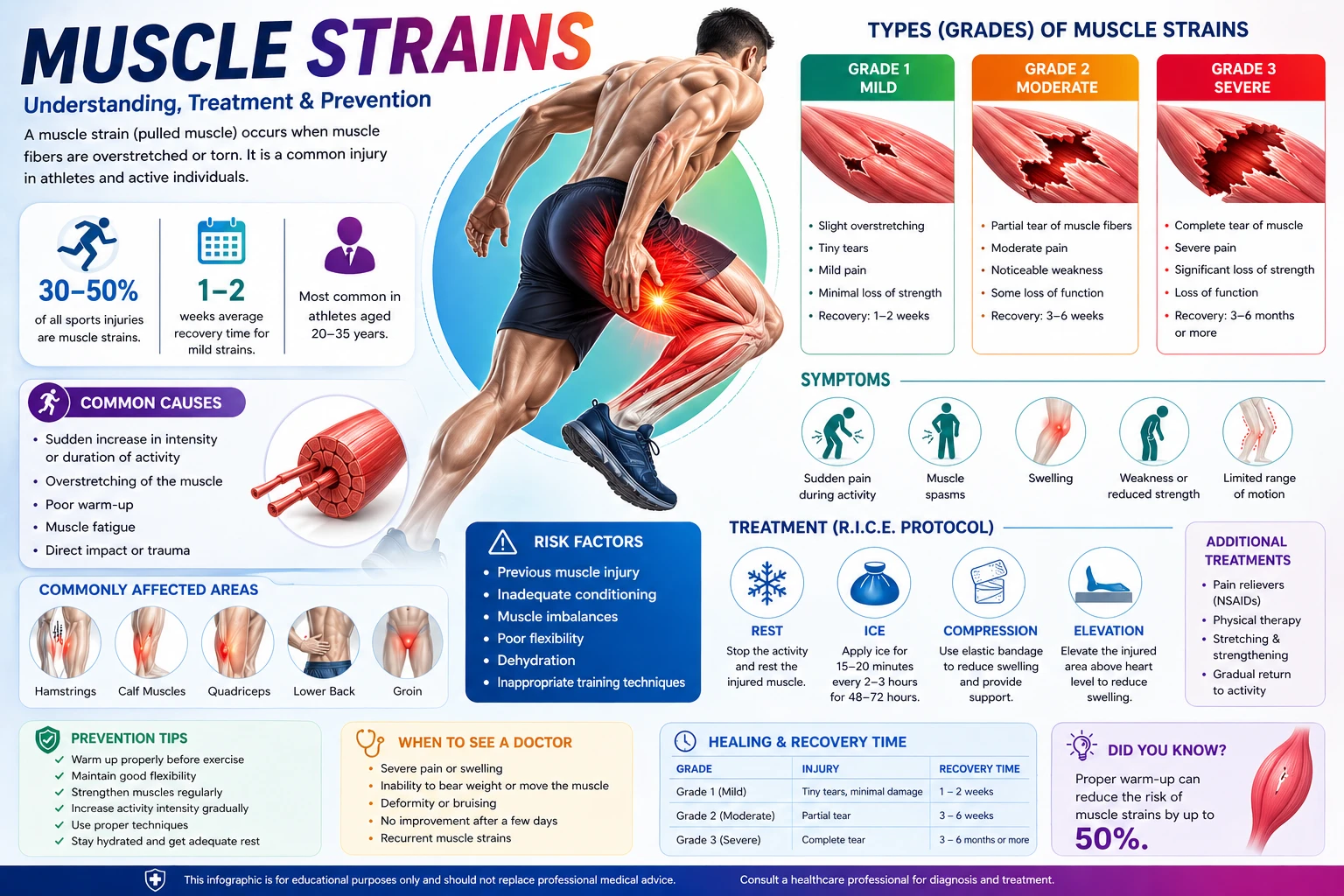
In Delhi, daily activities like lifting heavy objects, gym workouts, and prolonged sitting increase mechanical stress on muscles. Repetitive strain without recovery time raises the likelihood of fiber breakdown.
Pain intensity depends on injury severity. Mild strain involves limited fiber disruption, while severe strain affects larger sections of muscle tissue and reduces functional strength.
Muscle Strain Meaning
Muscle strain occurs when muscle fibers are stretched beyond their functional limit, causing partial tearing at the microscopic level. Clinical sources classify this as a soft tissue injury affecting contractile units called myofibrils. When overload happens, sarcomeres inside the muscle lose structural alignment. This disruption reduces force generation and triggers pain receptors within surrounding connective tissue.
Inflammation begins immediately after injury. White blood cells move to the damaged site to clear broken tissue and initiate repair. This process causes warmth, tenderness, and stiffness in the affected muscle. In Delhi-based lifestyles, sudden physical stress is common during gym workouts, lifting, or long commuting hours followed by sudden activity. These abrupt load changes increase the risk of fiber disruption without proper conditioning.
Severity depends on how many fibers are affected. Mild strain involves limited disruption, while moderate to severe strain reduces functional muscle strength and restricts normal movement patterns.
Muscle Pain After Workout: Normal Soreness vs Injury
Up to 30–50% of active individuals experience delayed muscle soreness after unaccustomed exercise, according to clinical exercise physiology data. This condition is known as delayed onset muscle soreness. Normal workout soreness develops due to microscopic damage in muscle fibers and metabolic stress during exercise. It typically appears 24–72 hours after activity and gradually reduces without medical intervention.
DOMS causes diffuse muscle stiffness rather than sharp localized pain. Movement may feel restricted, but strength loss is usually mild and temporary. Muscle strain, however, involves structural fiber injury. Pain appears during movement and can persist even at rest. Swelling, weakness, and sharp localized tenderness indicate a higher likelihood of strain rather than normal soreness.
In Delhi, sudden transition from inactivity to intense gym sessions increases the risk of confusing soreness with injury. Incorrect form, heavy weights, and inadequate warm-up further increase muscle overload and injury probability.
Muscle Strain Symptoms
- Sharp or localized pain (15–30 minutes after activity or sudden movement) indicates possible fiber injury rather than normal soreness.
- Swelling around the affected muscle within 24 hours occurs due to inflammatory fluid buildup after tissue damage.
- Reduced strength during contraction (up to 40–60% loss in moderate strains) limits normal movement and load-bearing ability.
- Tenderness on touch at a specific point suggests localized fiber tearing instead of generalized muscle fatigue.
- Muscle stiffness lasting beyond 48–72 hours often indicates strain severity higher than mild DOMS.
In clinical practice, symptom clustering is more reliable than single signs. Pain combined with weakness and swelling strongly indicates muscle strain rather than temporary post-exercise soreness.
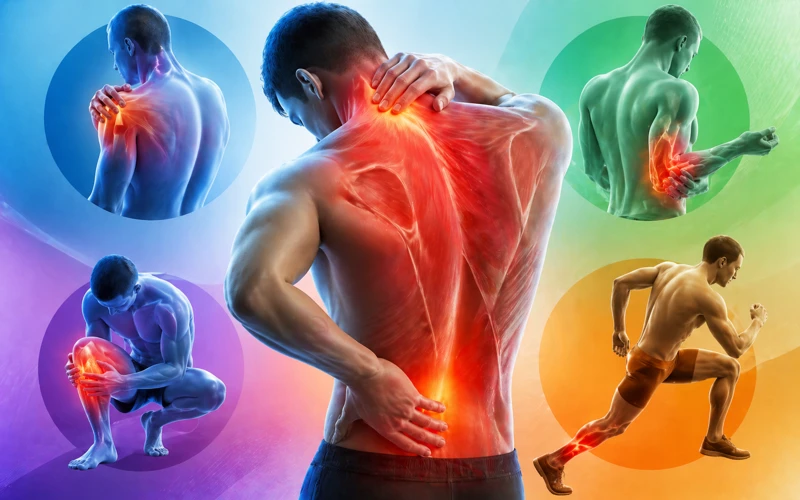
Muscle Strain in Neck: Causes and Movement Limits
- Neck muscle strain occurs in 25–40% of office workers, commonly due to prolonged forward head posture during screen use.
- Upper trapezius and cervical neck extensor overload leads to fiber micro-tearing, reducing normal neck rotation and flexion range.
- Pain is often localized on one side of the neck, increasing during turning, lifting, or prolonged sitting.
- Stiffness may limit movement by 20–50% depending on severity, especially after long static posture positions.
- Referred pain into shoulders or upper back can occur, due to shared nerve pathways in cervical musculature.
Muscle Strain in Back: Load Stress and Posture Impact
- Lower back strain accounts for nearly 60–80% of adult back pain cases, commonly linked to lifting stress and prolonged sitting.
- Erector spinae and lumbar stabilizer muscles experience micro-tears under repeated load, especially during bending or incorrect lifting techniques.
- Pain increases during forward bending, twisting, or standing for long durations, indicating mechanical stress on lumbar fibers.
- Stiffness may reduce spinal mobility by 30–50% in moderate strain cases, affecting daily movement patterns like walking or sitting.
- Postural imbalance from long sitting hours increases uneven muscle loading, leading to chronic strain development over time.
In Delhi, extended commuting, desk-based work, and low physical activity levels significantly increase lumbar muscle strain risk, especially without core strengthening or posture correction.
Muscle Strain in Calf: Walking and Running Pain Indicators
Calf muscle strain typically affects the gastrocnemius and soleus muscles, which are responsible for pushing the foot during walking and running. Clinical data shows calf strains commonly occur during sudden acceleration, sprinting, or improper warm-up before physical activity.
- Sharp pain in the lower back of the leg during push-off movement is the earliest indicator of calf strain
- Difficulty in tiptoe standing or pushing the foot downward, showing reduced muscle power
- Swelling or tightness in the calf within 12–24 hours, due to inflammatory fluid accumulation
- Pain intensity increases during walking or climbing stairs, indicating active fiber stress
- In moderate cases, visible muscle stiffness reduces ankle mobility by 20–40%
Muscle Strain in Leg: Mobility Restriction Patterns
Muscle strain in the leg can involve multiple muscle groups such as the quadriceps, hamstrings, and tibialis muscles. These muscles support walking, standing, and lower-body stability. Strain occurs when sudden force, overstretching, or repetitive stress exceeds muscle tolerance, leading to partial fiber damage.
- Pain during walking or changing direction quickly, indicating active muscle fiber stress
- Reduced ability to bear weight on the affected leg, especially in moderate strain cases
- Tightness in front or back thigh muscles, depending on quadriceps or hamstring involvement
- Swelling within 24 hours, due to localized inflammation in damaged fibers
- Weakness during stair climbing or squatting movements, showing reduced muscle control
Muscle pain is not always a simple fatigue response. In many cases, it reflects microscopic fiber damage, inflammation, or overload in specific muscle groups. Mild soreness after activity is temporary and resolves son, while persistent pain, swelling, and weakness indicate a possible muscle strain that needs proper evaluation.
Lifestyle factors such as long sitting hours, irregular exercise patterns, heavy lifting, and poor posture significantly increase the risk of muscle strain in the neck, back, calf, and legs. Early recognition of symptoms and correct differentiation between soreness, strain, and tear is essential to prevent worsening injury and long recovery periods.
If you are experiencing persistent muscle pain, restricted movement, or suspected muscle strain, early medical evaluation is important to prevent complications.
The Bone Clinic in Delhi provides structured orthopedic assessment for muscle, joint, and soft tissue injuries, including targeted diagnosis for neck, back, leg, and calf strain conditions.
Timely consultation helps identify whether your condition is simple muscle fatigue or a deeper strain requiring orthopedic treatment in Delhi.